Author Archive

Why We’re Called the Church of the Nazarene

Archives’ Answers: The Denomination’s Name

.
Friday, June 8, 2012
Global Ministry Center
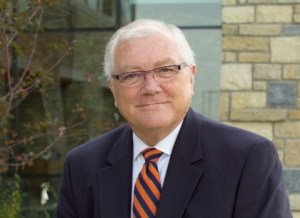
By Stan Ingersol, Church of the Nazarene Archivist
.
.
In a new segment, Nazarene Archives answers a question about the history of the Church of the Nazarene denomination. This month: “Exactly how did the Church of the Nazarene get its name?”
.
The Hebrew name for “Jesus,” derived from “Joshua,” was common in first-century Palestinian Judaism, so “Jesus of Nazareth” specified which Jesus, and Acts references the early Palestinian Christians as followers “of the Nazarene” and “the sect of the Nazarenes.” The term “Christian” developed outside Palestine, in Syria according to Acts, in conjunction with the mission to the Gentiles. It is derived from “Christos,” a Greek translation of the Hebrew “messiah” or “anointed one.” As Gentile Christianity spread through the Mediterranean basin, Jesus became known as Christ and references to “the Nazarene” diminished.
.
Nineteenth and early 20th century European writers produced numerous biographies of Jesus, re-popularizing the term “Nazarene” and setting the stage for how the Church of the Nazarene received its name.
.
In 1894, some California Methodists became associated with the Peniel Mission in inner-city Los Angeles. These included Phineas Bresee, a minister, and J. P. Widney, a prominent Los Angeles citizen.
J. P. Widney


J. P. Widney, who gave the Church of the Nazarene its name.
(Nazarene Archives photo)

Widney, a physician, had founded the Los Angeles Medical Society and had served as president of the University of Southern California. Widney and Bresee had been friends for a decade. Bresee was the Peniel Mission’s preaching pastor, while Widney taught medical courses to nurses and taught a series of studies on the life of Christ, a subject that fascinated him, for he was an avid reader of “the lives of Jesus” literature.

One year later, Bresee, Widney, and others established a new church among the poor in October 1895. At an early business meeting, the name “Church of the Nazarene” was adopted upon Widney’s suggestion. Other proposed names included various uses of “Methodist,” but Widney told the congregation that, after praying all night about the matter, he liked that the word “Nazarene” identified the church with the “lowly, toiling, ministry of Jesus the Nazarene.”

West Coast-based Nazarenes later merged with other denominations, forming the Pentecostal Church of the Nazarene, but the 1919 General Assembly deleted “Pentecostal” from the church name, since the word was increasingly understood in reference to charismatic gifts like speaking in tongues, which Nazarenes never practiced or approved. Thus, since 1919, the denominational name has been identical to that of its western parent-body — a name that originated because J. P. Widney read “lives of Jesus” books, and his imagination had been captured by a strong personal vision of “the Nazarene.”

.

.
For more information about Nazarene Archives, click here. To submit a question for the next Archives’ Answers, email submitnews@ncnnews.com.

For a larger version of the above photo, click here.

____________________

.
This article is copied from and can be found at at the Global Ministry Center site of Nazarene Communication Network News site.
.
.

Ministry to Individuals With Special Needs

Here is a good article about what a church is doing for the people with special needs in their community and how the Church of the Nazarene was originally interested in reaching out to the poor, addicted and marginalized in the world.

.

Can Anything Good Come from Nazareth?

by Julie Keith

.

I am a transplant into the Church of the Nazarene.  While growing-up, and even as a young adult, I heard about the Church of the Nazarene but never really knew much about its beliefs or history.  I came to the church through a variety of circumstances, the most recent being an interview for the special needs pastor position at First Church of the Nazarene of Pasadena, California (PazNaz).

Since high school, I have been involved in some kind of ministry to individuals with special needs, as well as with their families.  Prior to coming to PazNaz, I was serving at a church experiencing financial problems.  I believe God used this set of circumstances for me to discover the church I now call home.

Pastor Scott Daniels shared the history of the church during my initial interview.  He shared how Phineas F. Bresee, the first general superintendent in the Church of the Nazarene, wanted to do more for the poor, the addicted, and the marginalized in society.  Of course, individuals with special needs are still marginalized in the world.  As I listened and learned how we obtained our denomination’s name I knew the position was a natural fit and I had come home.

The next day Jesus decided to go to Galilee.  He found Philip and said to him, ‘Follow me.’  Now Philip was from Bethsaida, the city of Andrew and Peter.  Philip found Nathanael and said to him, ‘We have found him about whom Moses in the law and also the prophets wrote, Jesus son of Joseph from Nazareth.”  Nathanael said to him, ‘Can anything good come out of Nazareth?’  Philip said to him, ‘Come and see” (John 1:43-46 NRSV).

Can anything good come from Nazareth?  These words were the foundation for the name, Church of the Nazarene.  Nazarenes are named after Jesus the Nazarene.  Our church has its core the belief that something good can come from “Nazareth.”  Nazareth was considered the pit of the earth (my definition).  No one believed anything good could come from Nazareth.  The same is often said about children, youth, and adults who have varying kinds of disabilities and special needs.

The majority of the people in our world do not truly believe anything good can come from individuals who have special needs.  While there are more programs and services becoming available in the U.S., individuals in other places around the world with special needs are kept hidden.  They are not allowed in schools and typically not in places of worship.  The work that is being done to make an impact in the lives of the countless girls, boys, men, and women is largely being done by the community of faith.

A couple of years ago I had the opportunity to go to Romania on a mission trip to provide training and education to local churches and Christian organizations to better equip them to reach those with special needs for Christ.  The second part of this trip was to go into the orphanages and provide training and encouragement to the staff who wee providing care for orphans, many who had severe disabilities.

One particular day stands out in my mind as we were visiting a state-funded orphanage.  None of the orphans had anything that belonged to them.  On community outing days, the staff would go to the store closet and pull out clothes that were appropriate for the children to wear on outings to the community.

The next day we saw some of the exact same clothes on different children.  We then had the privilege of visiting an orphanage that was funded by a local church.  The contrast was amazing.  In this orphanage there was a row of  wheelchairs.  Each child had his or her own wheelchair.  It was nap time so most of the children were sleeping.  The facility was clean and attractive.  Children who were there had been rescued from some of the orphanages because if they had not been moved to this facility they would have most likely died.

After that visit, I was impressed with what happens when the people of God truly live into god’s kingdom and reach out and believe that something good can come from Nazareth.

This past June, at the Los Angeles District Assembly, we were reminded again of the call God has placed on us as the Church of the Nazarene.  It is our call to reach those from whom the world thinks nothing good can come.

Who are the children, teens, and adults in your life who have special needs?  What is God calling you to do?  What can your church do to begin to dream and plan to show God’s love and compassion to these individuals?  Begin to seek God’s face about how to reach out to those who are marginalized in most societies.

No matter where you live, there is at least one child or teen or adult and their family who need to know something good can come from them.

.

.

Julie Keith is special needs pastor at Pasadena, California, First Church of the Nazarene. This article first appeared in the November/December 2012 issue of Holiness Today.  You can follow Julie Keith’s blog at JulieKeithsReflections.

When in Rome-What are Christians to Do?

When in Rome-What are Christians to Do?

 by Al Truesdale
.

Al Truesdale

The writings of the apostle Peter might have first been penned nearly 2,000 years ago, but as time passes, they become more and more relevant to believers seeking to serve Christ. For in many ways, our society is beginning to mirror the culture in which early believers lived.

The apostle Peter urged his audience to rigorously discipline their values and practices. Greco-Roman culture contrasted sharply with his description of Christian discipleship. For example, Greco-Roman society was honeycombed by polytheism (worship of many gods). The Romans even encouraged their citizens to worship multiple gods, as long as people recognized the supremacy of Rome and its central deities. The absence of hope, as well as fear of demons, death, and judgment, marked Greco-Roman culture. So one issue that made the gospel attractive was its promise of refuge from a pervasive fear of spiritual enemies.

Also, from a Christian standpoint, Greco-Roman society was morally rudderless. This was evident in Greco-Roman sexuality practices and entertainment. Laws placed few restraints upon sexual expression. Greeks saw human sexuality as only a pleasurable art. The Romans viewed it as that part of humanity where the animal still resided, and did not consider the idea that sexual intercourse should express a sacred bond of love between husband and wife. Between the ready availability of prostitutes and the presence of slaves in many households, sex was in plentiful supply.

Roman entertainment also depicted their lack of value for life and morals. The Roman Coliseum evidenced an expanding thirst for violence as the games degenerated into pointless massacre and the crowds became immune to cruelty and bloodshed. Claudius (A.D. 41-54) required that mortally wounded combatants remove their helmets so he and the crowd could better watch death’s agony.

Against this pagan backdrop, Peter called for Christians to conform to an entirely different way of life. Darkened passion, ignorance, and futility marked the old way. An imperishable hope, confidence in God, and holiness characterize the new. The Greco-Roman gods required strict attention to religious ritual, but they did not require strict moral conduct.

How unlike the holy God! The contrast between the promiscuity of many Greco-Roman deities and the holy discipline required of God’s children was unmistakable. No God like Him could be found among the Greco-Roman deities. Ransomed from futile ways, God’s children were now to express and share in His very nature (2 Peter 1:4).

Against this pagan backdrop, Peter called for Christians to conform to an entirely different way of life. (Design Pics)

Peter had no illusion about reconciling the kingdom of God with a pagan world. Neither should we. That doesn’t mean we should ignore or discount honorable conduct by those who are not Christians-many people display commendable efforts to lift the human spirit. But it does require us to vigilantly examine our social environment. Rigorous attention and discipline, as guided by the Holy Spirit, are as imperative today as they were in the first century.

The Western world is experiencing a “resurgent paganism” similar in many ways to the New Testament Greco-Roman context. As the light of morality and Christian practices dims, more and more people steer their lives by values and ideas that are “pagan” by first century standards. One of the greatest dangers Christians face today is that of subtly absorbing “pagan” values. Escaping this danger requires us to pursue the kind of alert and disciplined life in Christ that Peter urged.

Let’s identify three prominent characteristics of “resurgent paganism.”

1. The first is moral relativism. Society’s belief in moral norms that apply to everyone is decaying. Our shared Judeo-Christian moral fabric is fraying. This erosion has been described as a “fragmented moral universe.” No divine center is generally recognized as grounding morality. Our crumbling foundations are often replaced by the belief that “right” and “wrong” depend upon individual preferences. Morality is “relative” to a person’s social and temporal context. Its content can change from one circumstance and person to another.

Pop culture, advertising, and news and entertainment media regularly invite us to embrace moral relativism. The invitation is sometimes subtle, sometimes bold. Moral relativism contradicts the revealed character and will of God. Like acid, it will eat through a mind and life not disciplined by the Holy Spirit. Peter assures us that God has given us “everything needed for life and godliness” (2 Peter 1:3, NRSV).

2. The second characteristic of “resurgent paganism” is the idolatry of human sexuality. Billions of advertising dollars and an entertainment industry that knows no satisfaction drive the worship of sexuality. More and more ways are sought to exploit human sexuality. We are witnessing a revival of Aphrodite, the Greek goddess of love, beauty, and sexual rapture. Her temple in Corinth once housed perhaps hundreds of sacred prostitutes who “ministered” a steady stream of worshipers. Aphrodite’s “temples” are now prevalent in society. This feature of “resurgent paganism” measures the value of everything by how well it exploits sex. The standard applies to people, toothpaste, clothing, corrective lenses, and automobiles.

3. A third characteristic of “resurgent paganism” is that a person “is” what he “owns.” The more a person “owns” the more of a “person” he or she is. Contrary to what Jesus said, we measure humans as quantitative, not qualitative. For example, advertising tries to convince us that people who wear certain labels are valued more highly. Cable news programming commits endless hours to tracking the careless behavior of a wealthy starlet. Judging by the airtime given, she is more of a person than a faithful schoolteacher or dedicated foster parents.

So, across the centuries the Apostle Peter now speaks to us in a period of resurgent paganism: “Prepare your minds for action; be self-controlled; set your hope fully on the grace to be given you when Jesus Christ is revealed” (1 Peter 1:13). Our unfailing resource is the power of God that raised Jesus Christ from the dead.

.

Al Truesdale is emeritus professor of philosophy of religion and Christian ethics, Nazarene Theological Seminary.

.

Originally published in Holiness Today, March/April 2009.  Currently found at Holiness Today Online.

.

We Believe in Entire Sanctification

We Believe in Entire Sanctification

by David J. Felter

David_Felter_for_Web_1-10

David J. Felter (Attig Photography)

In what is being called the “historic” 27th General Assembly this past June [2009], delegates once again affirmed Article X-Entire Sanctification, from our Articles of Faith. It is important that every Nazarene understand what many call, “our distinguishing doctrine.”

Scriptures remind us that all who are in proper relationship with God are called to be holy. Christian holiness obviously points to Jesus Christ and is descriptive of those persons who exist in a dependent relationship with Jesus. Christians are at once a holy people, and are also called to pursue holiness in expressions of their relationship with Jesus Christ.

The word sanctification is different from the word holiness. We might say that sanctification is the means to the end, which is holiness. The Christian Church believes in the sanctifying work of God, (1 Peter 1:2) We believe this call to holiness originates in the First Testament’s call to holiness (Leviticus 11:44-45) and continues on into the New Testament (1 Peter 1:15-16).

Bible scholars have understood the term sanctification as an “umbrella” term with differing levels of meaning. The term may refer to something we do, as well as to something God does. It has both the element of process and crisis inherent within its range of meanings. We believe that Christian holiness requires the entire sanctification of believers and that this involves both a process whereby we express our deepening devotion to God and our willingness to experience a “moment” of total submission to the Lordship of Jesus Christ. Also, we believe the Holy Spirit is doing the work of sanctification-setting us apart as the exclusive property of God-and cleansing our interior being of all that conflicts with love for God and our neighbor.

Further, we believe the best definition of Christian holiness is the simplest one: Christlikeness. Christian holiness is about love and the renewal of God’s image in our being. It was summed up by our Lord when He stated: “‘Love the Lord your God with all your heart and with all your soul and with all your strength and with all your mind’, and, ‘Love your neighbor as yourself'” (Luke 10:27).

dove_with_flameWe believe entire sanctification is that act of God following our conversion experience by which Christians are freed from competing loyalties that hinder or obstruct uncontested love for God and one’s neighbor. Further, we believe the heart is cleansed from the principle of sin, which is undeniably selfishness. By the power of the Sanctifying Spirit, we are enabled and empowered to love God with the totality of our being, and our neighbor as ourselves.

Entire sanctification is provided for every Christian by the blood of Jesus. It is by grace through faith and follows our willing, complete surrender to the Lordship of Jesus Christ. The sanctifying Spirit affirms this gracious relationship to our consciousness, commonly known as the witness of the Spirit.

We believe that there is a difference between a pure heart and a mature character. The former is obtained in an instant, the result of entire sanctification; the latter is the result of growth in grace. The sanctifying Spirit motivates us toward spiritual growth and Christian maturity. Our responsibility is to nurture this impulse by incorporating all the means of grace.

Our distinguishing doctrine, drawn from the inspirational insights of Wesley and a long line of Scripture students, back to the apostolic New Testament Church, has never been more important or relevant. It stands the test of scriptural scrutiny, and responds to the spiritual and social needs of every culture, in every location. Every Christian can experience what John Wesley called, “an entire renewal in the love and image of God.”

.

David J. Felter is editor in chief of Holiness Today, though just this week he announced his retirement. This article was originally published in Holiness Today, November/December 2009; it can currently be  found at Holiness Today.

.